|
|||
 |
 |
 |
 |
|
|||
|
|
|
|
 |
 |
|
|
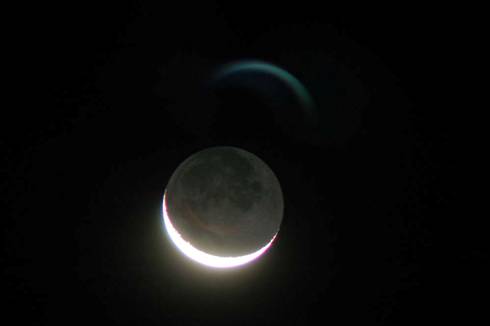
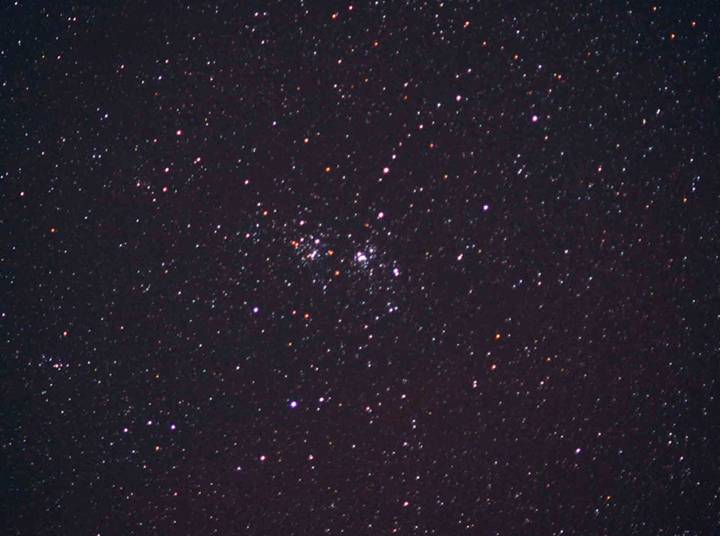
IV. Piggyback and Afocal Astrophotography with a DSLR Camera Digital SLR cameras adapt themselves well for afocal and piggyback astrophotography, particularly if the objects are bright and the exposures are short (figures 17-18):
Figure 17. Afocal image of a waxing crescent Moon taken with a Nikon D100 camera and 50 mm f/2 lens held to the eyepiece of a five inch f/5 refractor. One-twenty fifth second exposure, ISO 1000. T. Hunter.
Figure 18. The Double Cluster (NGC 869 and NGC 884) two minute exposure with 135 mm f/3.5 lens, ISO 1600. The Nikon D100 camera was piggybacked onto a Meade 12-inch LX 200 telescope for the exposure. T. Hunter.
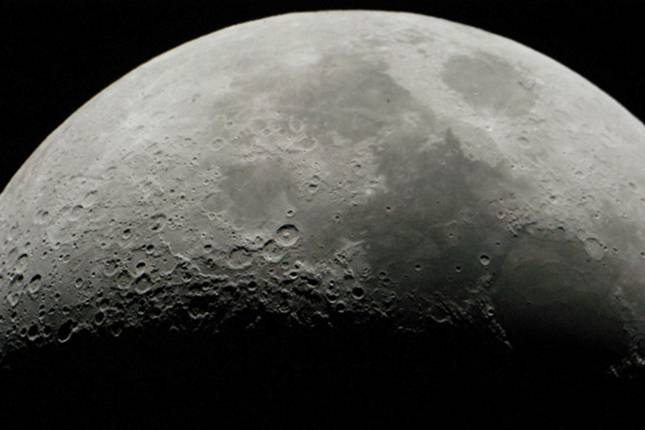
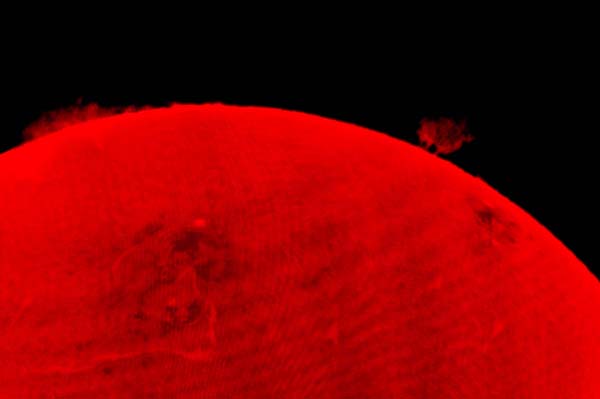
The afocal technique can be used with any simple digital camera held up to the eyepiece of a telescope (Aguirre, 2001). The camera should be situated on a tripod for steadiness or an adapter used to attach the camera to the eyepiece holder (Seronik, 2004). The camera lens must be chosen so that it allows focusing of the image formed by the telescope’s eyepiece. Spectacular pictures of the Moon and planets have been obtained with this technique, and adapters are available for coupling of digital cameras to telescope eyepieces. The afocal technique uses the built in digital camera lens or a lens attached to a DSLR camera to focus the image from the telescope eyepiece onto the camera’s chip. It differs from prime focus telescopic imaging in which the camera body is attached directly to the telescope so that an image from the prime focus of the telescope is directed onto the camera’s imaging chip. The afocal technique also differs from the technique of eyepiece projection in which a telescope eyepiece projects an image onto the camera chip. There is no camera lens with eyepiece projection. Eyepiece projection is generally used for planetary or Lunar imaging. At the present time, web cams are the preferred imaging tool for Lunar and planetary imaging rather than digital cameras or film techniques, because web cams are better able to capture crisp planetary images during moments of good seeing (Jones, 2004). V. Prime Focus Astrophotography with a DSLR Camera SLR digital cameras can be used for prime focus astrophotography by mounting the digital camera back onto the telescope and focusing the telescope’s image onto the imaging chip of the camera. If the object is very bright, such as the Moon or the Sun,[1] short exposures suffice for imaging, and multiple short exposures can be taken, allowing one to pick and choose the best images (figures 19-20):
Figure 19. Prime focus image of the Moon. One-fourth second exposure, ISO 1000, Meade 12 inch f/6.5 LX 200 telescope. T. Hunter.
Figure 20. One-half second prime focus image of the Sun, ISO 1600. Six inch f/10 refractor fitted with a Coronado Solar (prominence) Filter. T. Hunter. [1] The Sun must be properly filtered to protect the observer and the camera equipment.
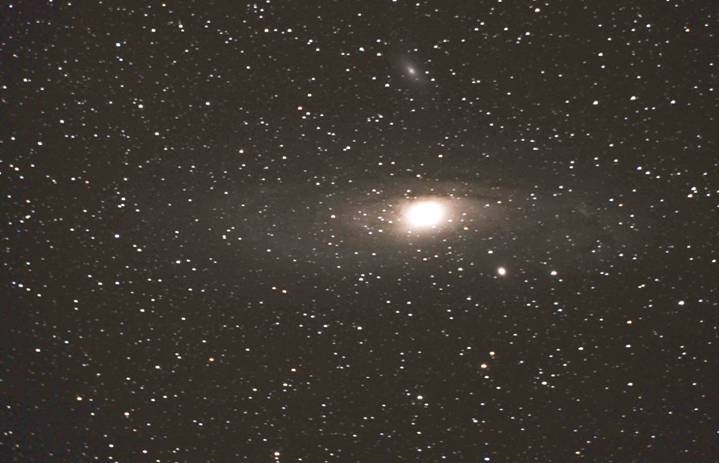
Figure 21. The Great Andromeda Galaxy (M31). Two minute exposure with a Takahashi 5 inch f/3.3 telescope, ISO 1600. T. Hunter and James McGaha.
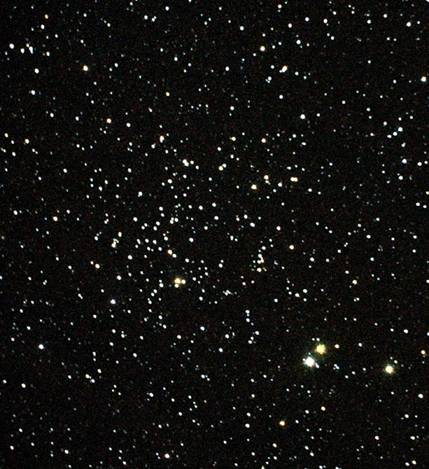
Figure 22. NGC 752, a large open cluster. Two minute exposure with a Takahashi 5 inch f/3/3 telescope, ISO 1600. T. Hunter and James McGaha. .
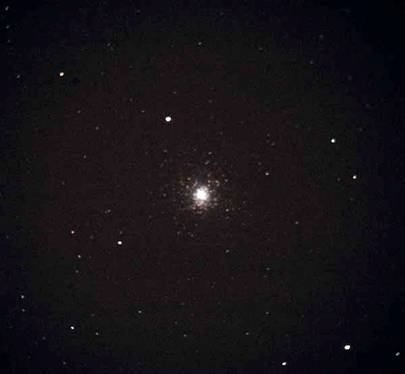
Figure 23. M15, a bright globular cluster. Two minute exposure with a Meade 12 inch f/6.5 LX 200 telescope, ISO 1600. T. Hunter. Faint galaxies and nebulosity can be successfully imaged with digital cameras if multiple short exposures are carefully added together (Schedler, 2004). In general, a standard astronomical CCD camera is preferred for prime focus imaging because of its greater sensitivity and lower noise characteristics. Also, the present digital SLR cameras can not be used for photometry or most other scientific pursuits, because their digital data has not been calibrated with respect to any accepted scientific standards.
| Back | | Next |
|
||
 |
|||
Copyright © 2013 The Grasslands Observatory. All rights reserved. |
|||